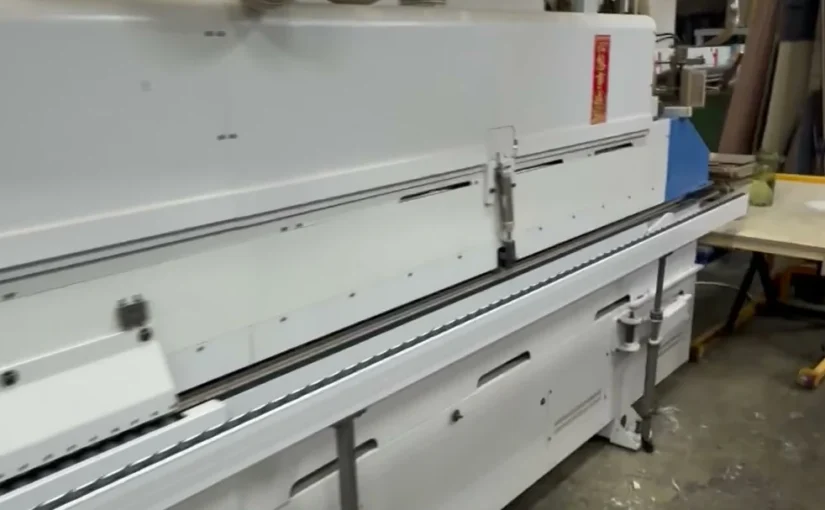
Edge banding is the thin strip that seals the raw cut edge of a cabinet panel. Every carpentry firm in Singapore does it. What separates them is the glue underneath, and there are three generations of it still in daily use here — sitting side by side in the same market, at prices that do not always tell you which one you are getting.
This is the PUR vs EVA edge banding comparison in full, plus the third option that still turns up in smaller workshops, and what each one actually changes about a cabinet five years in.
Three generations of edge banding, still all in use
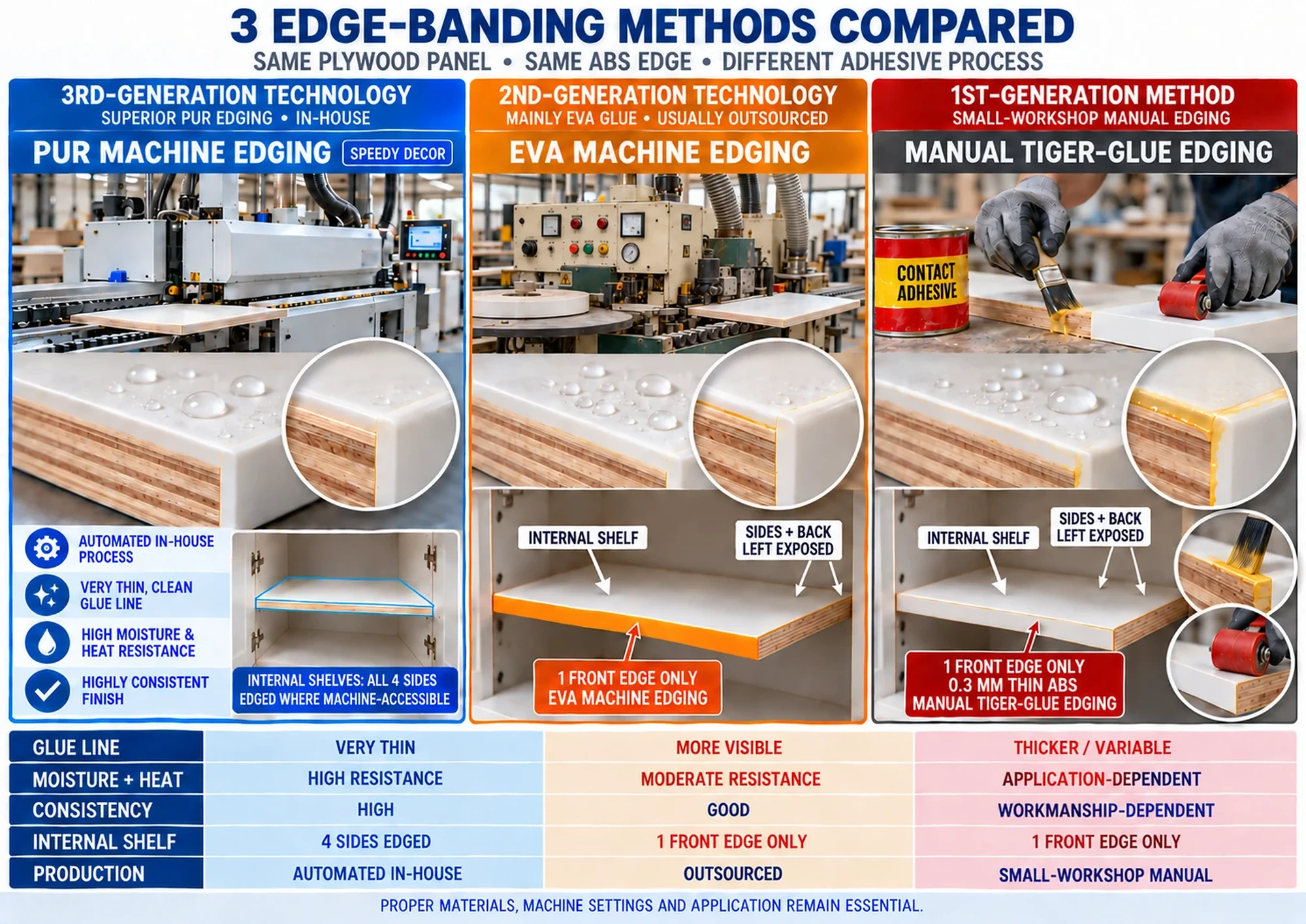
In-house here
Most common
Small workshops
The table below is the same comparison as text, because a table inside a picture is no use on a phone.
| Glue line | Moisture and heat | Finish consistency | In practice | |
|---|---|---|---|---|
| PUR machine edging | ✓ Consistent | ✓ Consistent | ✓ Consistent | 0.5 mm ABS as our minimum. Internal shelves edged on all four sides wherever the machine can reach. |
| EVA machine edging | – Varies with settings | – Varies with settings | ✓ Consistent | Automated and repeatable, but a more visible line and moderate heat resistance. Internal shelves are usually edged on the front only. |
| Manual contact adhesive | ✗ Depends on workmanship | ✗ Depends on workmanship | ✗ Depends on workmanship | Often 0.3 mm ABS, applied by hand. Front edge only, and the bond depends on the person. |
✓ Consistent – Varies with settings ✗ Depends on workmanship
What PUR edge banding does that EVA does not
PUR cures rather than sets. The adhesive reacts with ambient moisture and crosslinks into something that will not re-melt, which is why it holds up against the heat coming off a hob and the steam coming out of a kettle. EVA is a hot-melt: it went on hot and it will soften again when it gets hot enough.
The practical consequences are narrow but they matter in the places that fail first — the run beside the cooker, the bathroom vanity, the panel over the kettle. Elsewhere in the flat, the honest answer is that the main benefit is a cleaner-looking edge. We say the same thing about laminate choice in our guide to matte versus glossy finishes: pay for the difference where it does work.
The part nobody asks about: how many edges
An internal shelf has four cut edges. The visible front one is nearly always banded. The other three — two sides and the back — are commonly left raw, because nobody sees them once the shelf is in. That is three exposed plywood edges per shelf, sitting inside a cabinet in a Singapore kitchen.
Banded on four sides
- A continuous band around the whole shelf, not a strip on one side
- Helps block humidity reaching the plywood core at the cut edges
- Reduces exposed-edge access for insects
- Looks finished from every angle, including through a glass front
Front edge only
- Three raw plywood edges per shelf, facing into the carcass
- The back edge sits against the wall panel, the dampest part of the cabinet
- Invisible after installation, so nobody ever checks
- Cannot be added later without taking the shelf out
In-house, or trucked out and back
A PUR line is not a glue you can switch to. It needs the machine, controlled settings, trained operators and enough volume to keep running, because the adhesive cures on contact with air and an idle machine is a problem rather than a pause. That cost is why the usual arrangement is to send panels to a third party for edging and have them come back.
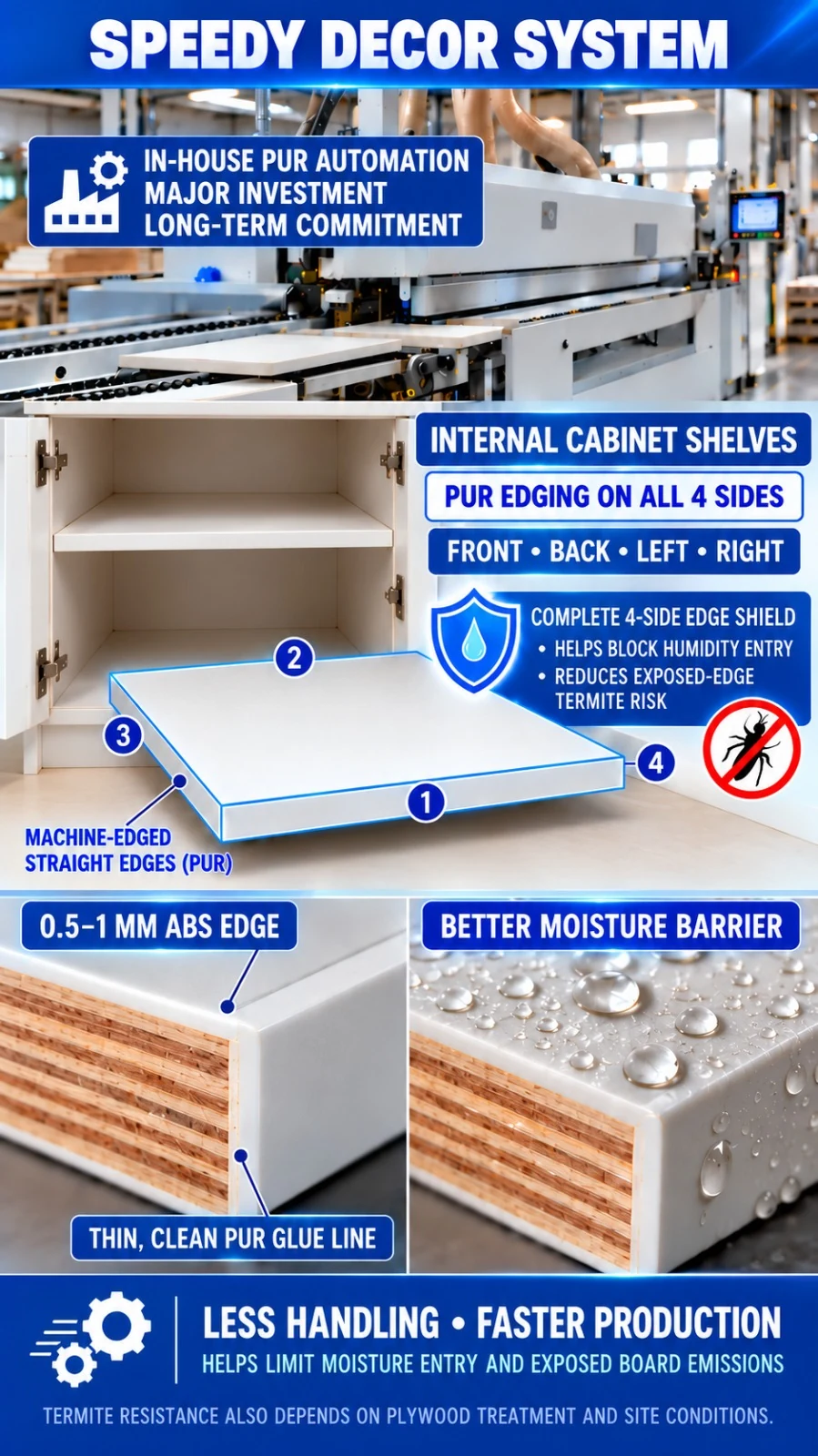
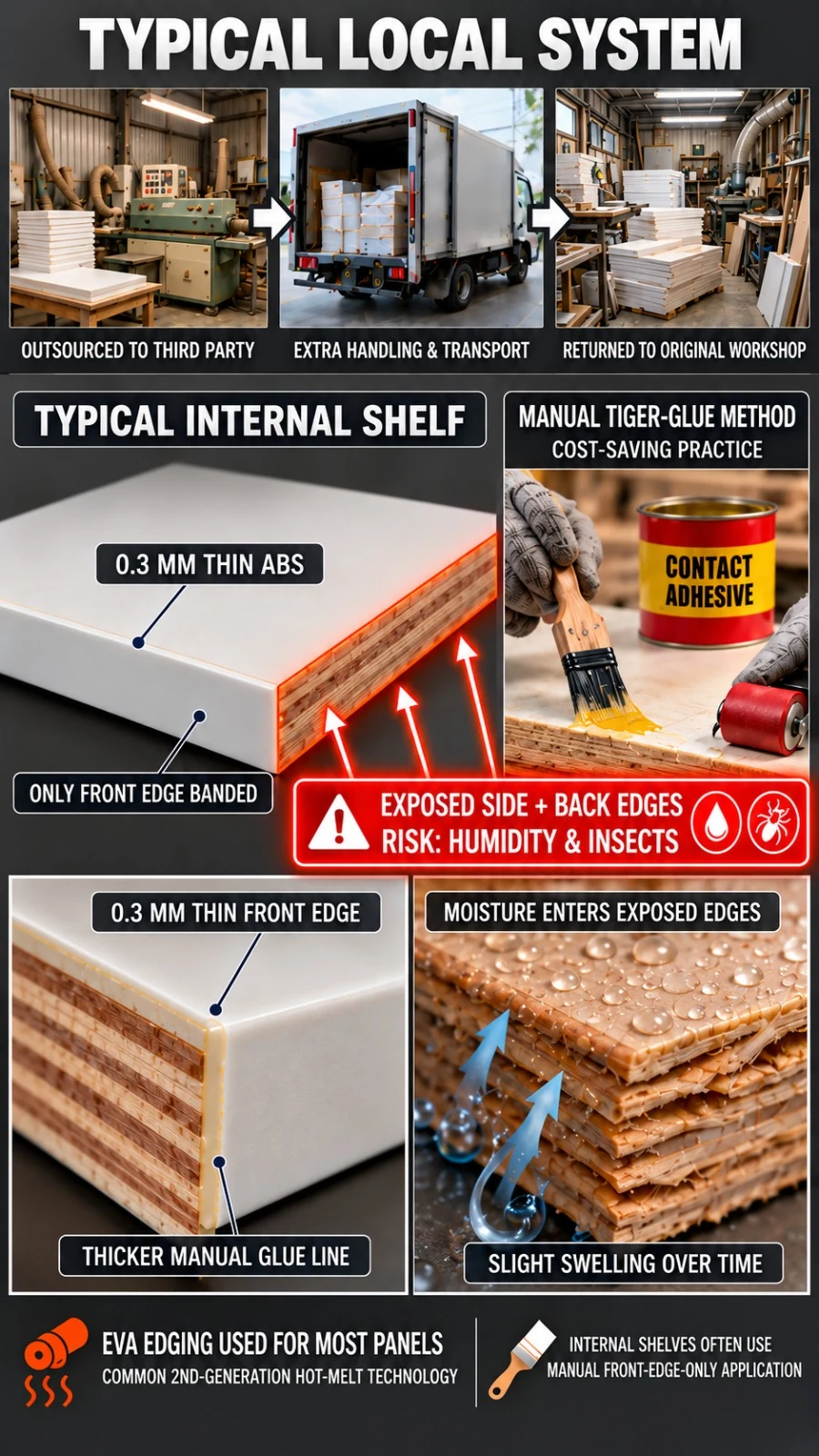
Cutting, adhesive, edge pressure, trimming and the final check are set by the people who will also answer for the result. Nothing is handed off mid-process.
No loading, trucking and unloading between two workshops. Less handling means fewer scratched faces, fewer delays and fewer panels stuck in someone else’s queue.
The machine has to be bought, housed, maintained and kept busy. Worth asking any contractor who claims PUR whether the line is theirs.
More on how our own floor is set up is in our local factory and fast carpentry page, and the full build is on the Craftsmanship tab of our company profile.
Where this matters most: the sink cabinet
Edge sealing is one of four things that decide whether the cabinet under the sink is still flat in year five. The others are the board under the basin, how the basin’s weight is carried, and whether water that gets in can drain out.
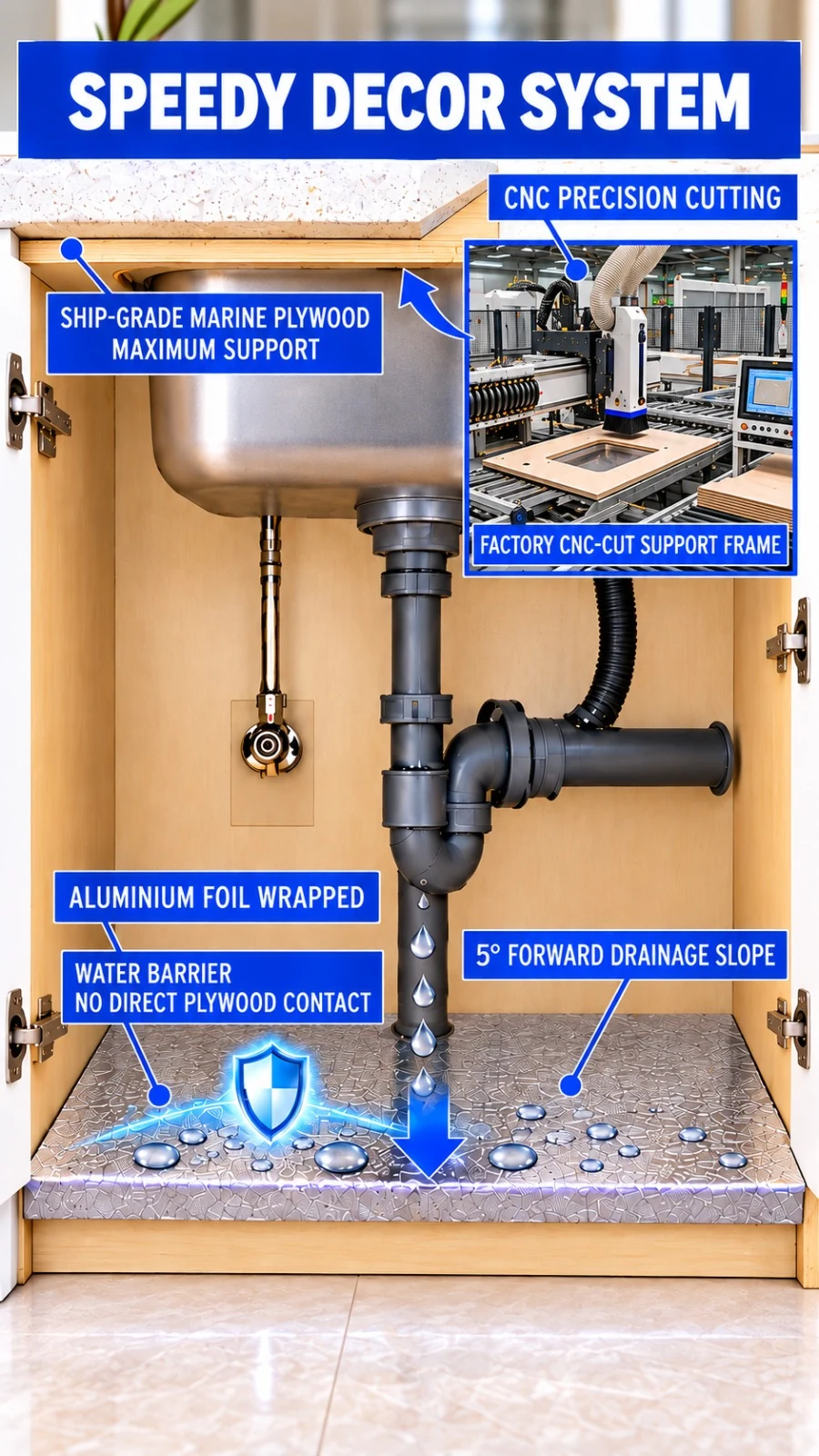
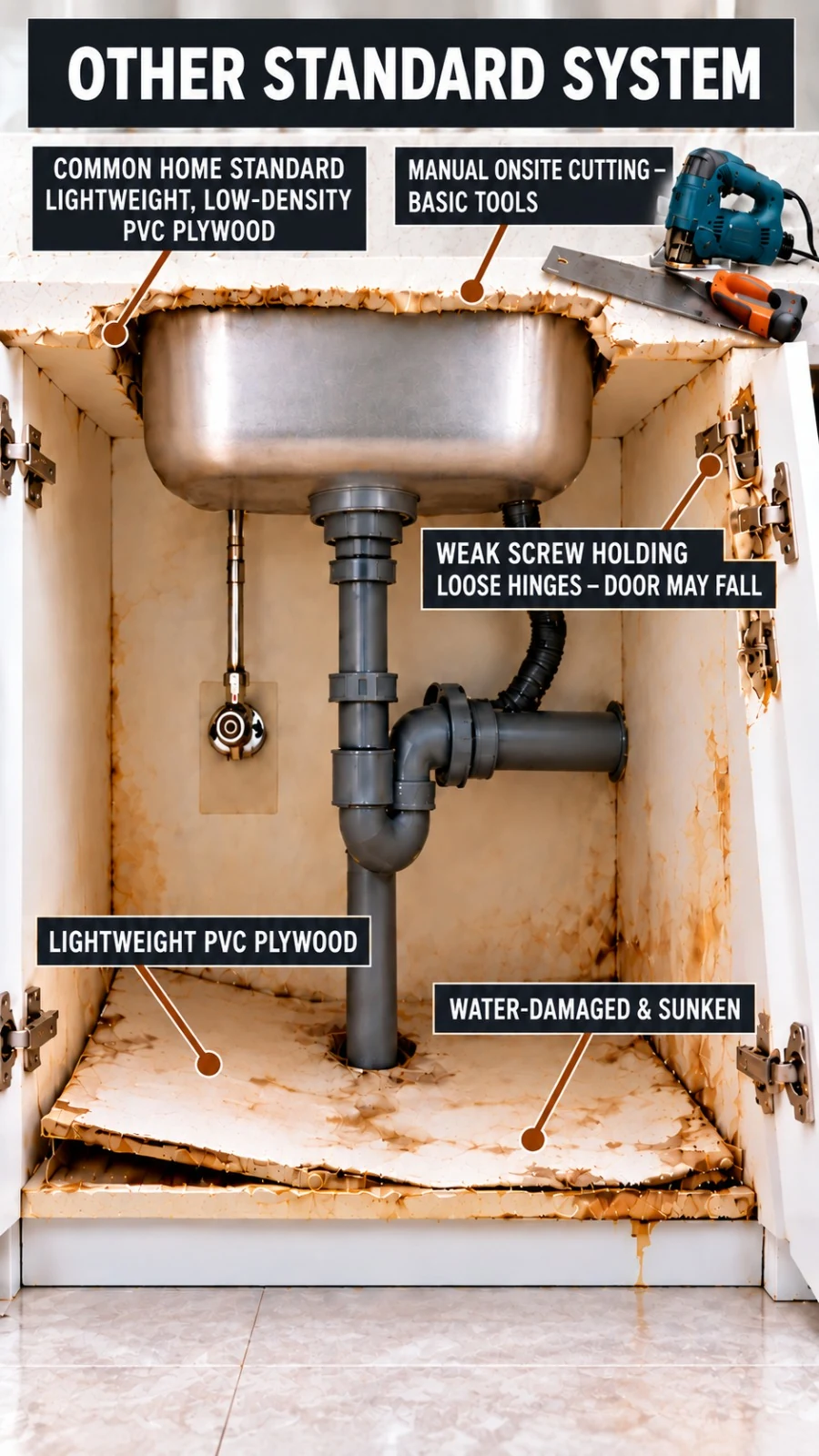
What it does not do
PUR edge banding does not make plywood waterproof and it does not make it termite-proof. Board grade, proper installation and ordinary household care all still matter, and the emission grade of the board is a separate question from how its edges are sealed. What better edge sealing does is protect the part of a panel that fails first.
How to check before you sign
Ask about the glue
- PUR or EVA on the edge banding, and is the line in-house or outsourced?
- What thickness of ABS, in millimetres?
- Can I see an offcut of each, side by side?
Ask about the edges
- Internal shelves: four sides banded, or the front only?
- Are cut edges at plumbing cutouts sealed, and with what?
- What board goes into the sink and vanity bases specifically?
Six questions, one message, and the answers exist in writing afterwards. There are more of them in the eight questions worth asking a kitchen renovation contractor, and five red flags on a renovation quotation covers what the paperwork itself should look like. If you are still working out scope, what goes into an HDB renovation package is the place to start.
Frequently asked questions
Is PUR edge banding worth paying more for?
For the wet and warm parts of a flat — the kitchen run, the bathroom vanity, the service yard — the better heat and moisture resistance is doing real work. For a bedroom wardrobe the difference is mostly the thinner glue line, which is an appearance benefit rather than a durability one. That is the honest split.
How can I tell whether my cabinets were edged with PUR or EVA?
Look at the line where the edge band meets the panel, under a direct light. PUR leaves a very thin, clean line; EVA leaves a more visible one; hand-applied edging leaves a thicker line that varies along its length. If you can feel a lip with a fingernail, it was not machine-pressed flush.
Does banding all four sides of a shelf really matter?
It is not about appearance. A raw plywood edge is where humidity reaches the core, and the back edge of a shelf sits in the least ventilated part of the cabinet. It is also the one thing here that cannot be added afterwards without removing the shelf.
Can edge banding be repaired if it starts lifting?
A short lifted section can sometimes be re-bonded. A band lifting along its length usually means the bond was weak or the core has taken on moisture, and re-gluing the surface addresses neither. Raise it inside the defects liability period rather than after it.
The short version
Three generations of edge banding are still sold in Singapore at once. In the PUR vs EVA comparison PUR is the current generation, EVA is the common one, and hand-applied contact adhesive is still out there. But the glue is only half the question — the other half is whether the banding reaches all four edges of a shelf or only the one you can see, and whether the firm quoting you runs the line themselves.
Both are answerable before you sign, and neither can be changed afterwards. What a well-built cabinet looks like from the outside is in our guide to what to look for in high-quality kitchen cabinets, and the custom kitchen page covers the rest of the build.